
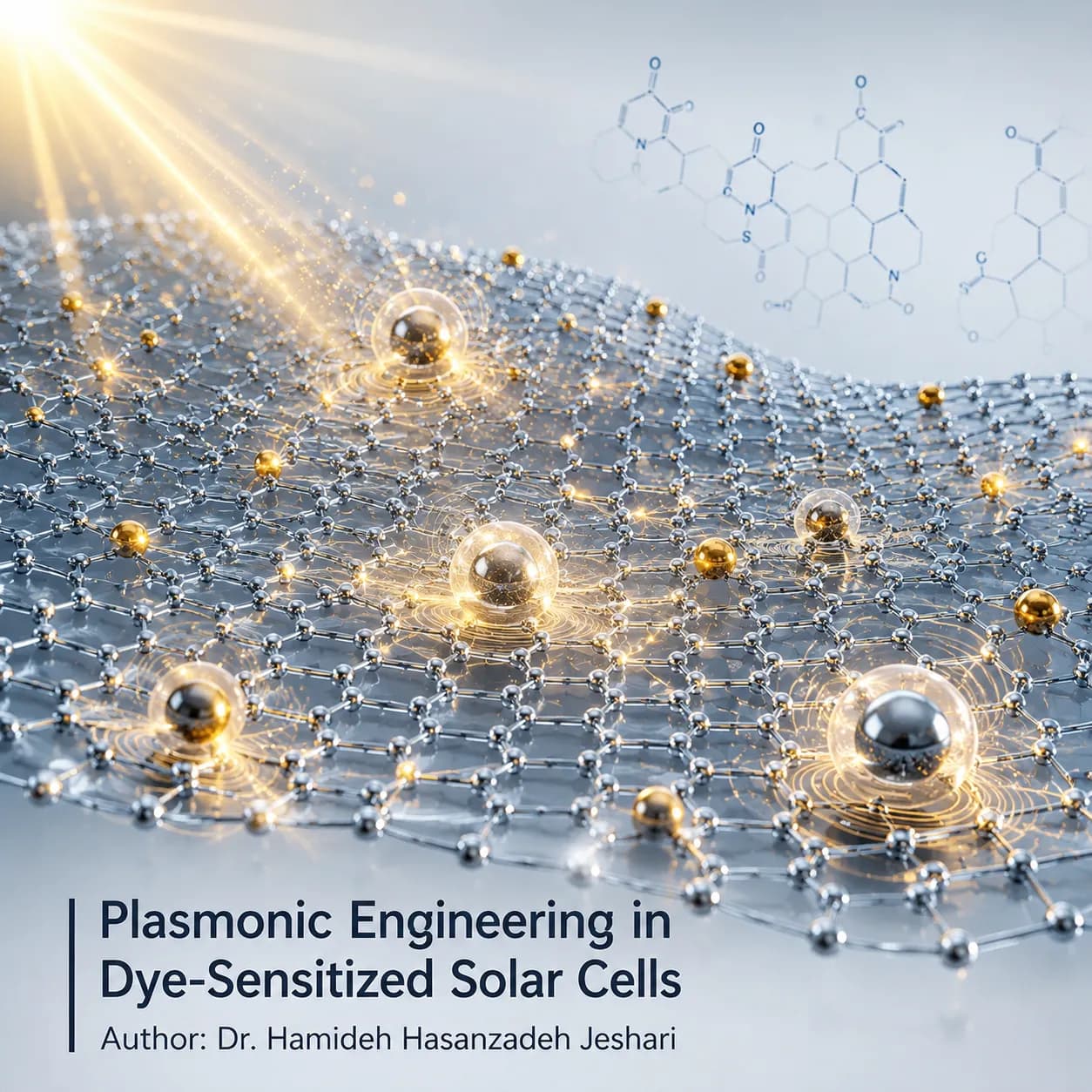
Featured Book

Graphene-Gold Nanocomposites: From Nanomaterial Synthesis to Device Performance for Next-Generation DSSC and Hybrid Photovoltaic Devices

Plasmonic Engineering in Dye-Sensitized Solar Cells: A Practical Research Guide for Thesis and Laboratory Work

By Dr. Hamideh Hasanzadeh Jeshari
Digital Book Edition — 2026

A research-oriented book that connects the theoretical foundations of plasmonics and graphene physics with experimental design, nanocomposite fabrication, advanced characterization, troubleshooting, reusable analytical frameworks, and device interpretation in dye-sensitized solar cells and plasmonic photovoltaic research.

Price

$0.00

View Book
Plasmonic Engineering in Dye-Sensitized Solar Cells: A Practical Research Guide for Thesis and Laboratory Work cover
ABOUT THIS BOOK

A focused academic guide to plasmonic DSSC research

Written by Dr. Hamideh Hasanzadeh Jeshari, this book presents a structured and research-oriented exploration of plasmonic engineering in dye-sensitized solar cells, with emphasis on graphene-gold nanocomposites, nanomaterial synthesis, interfacial behavior, optical response, and device performance. It is designed for readers who need more than a general introduction-offering a clear path from scientific fundamentals to practical research understanding.

FOR RESEARCH, THESIS WORK & LAB INTERPRETATION

Support stronger research decisions, clearer writing, and better data interpretation

This book is especially useful for graduate research, thesis development, literature review, laboratory work, and device-performance analysis. It helps readers connect theory with experimental design, material characterization, measurement results, and scientific explanation-making it easier to interpret findings, compare outcomes, and build more rigorous academic work.

AS A PRACTICAL ACADEMIC REFERENCE

More than a book introduction-built for real academic use

Useful as a reference for technical writing, research planning, scholarly discussion, and project-level understanding, the book supports readers who need reliable guidance across synthesis strategy, characterization logic, photovoltaics research, and plasmonic solar-cell interpretation. Its structured explanations make it valuable for both ongoing research and formal academic writing.

WHAT MAKES IT DIFFERENT

Less trial-and-error. More scientific reasoning.

Rather than focusing only on outcomes, the book emphasizes experimental logic, the relationships between material design and performance, and the reasoning behind research decisions. This makes it particularly useful for readers seeking deeper interpretation, stronger conclusions, and a more systematic approach to plasmonic and hybrid solar-cell research.

ACADEMIC USE NOTE

Designed for academic and research use

This book is structured to support thesis writing, literature review development, scientific explanation, and research presentation. Its visual and explanatory content is prepared with academic usability in mind for students and researchers working on solar-cell materials, plasmonics, and device interpretation.

Research & Insights

Latest from the Blog

Graduate-level articles on plasmonics, DSSCs, nanophotonics, and advanced photovoltaic science.

View all articles
Perovskite–Silicon Tandem Solar Cells: How Researchers Are Breaking the 35% Efficiency Barrier
Perovskite Photovoltaics10 min read

Perovskite–Silicon Tandem Solar Cells: How Researchers Are Breaking the 35% Efficiency Barrier

Discover how perovskite–silicon tandem solar cells surpass 35% efficiency through wide-bandgap engineering, interface passivation, optical management, and advanced tandem architectures—and why stability and scalability remain major challenges.

Sep 27, 2026Dr. Hamideh Hasanzadeh Jeshari
#Perovskite-Silicon Tandem#Wide-Bandgap Perovskites#Solar Cell Efficiency
Read more→
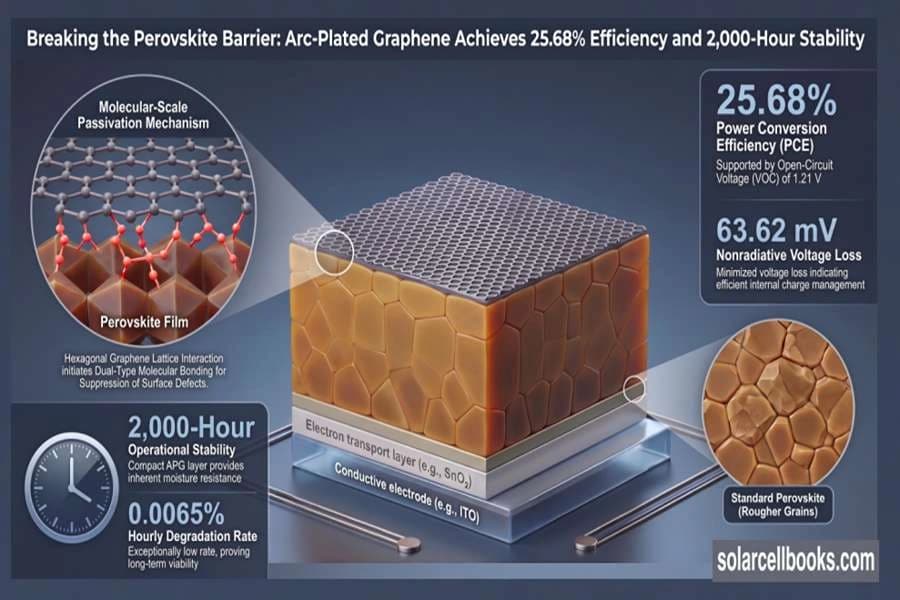
Perovskite Solar Cells 2026: From Lab Breakthroughs to Commercial Reality — A Graduate‑Level Review
Perovskite Photovoltaics25 min read

Perovskite Solar Cells 2026: From Lab Breakthroughs to Commercial Reality — A Graduate‑Level Review

Comprehensive review of perovskite photovoltaics in 2026: single‑junction certified 27.87 %, perovskite‑silicon tandem world record 34.85 %, all‑perovskite tandem 29.76 %, stability breakthroughs (>4‑year lifetime without encapsulation, 95 % after 3,000 h damp‑heat), and commercial milestones (Trina Solar 29.2 % full‑size module, 907 W). Includes detailed tables and future perspectives.

Jun 2, 2026SolarCell Library Research Team
#perovskite#tandem#silicon
Read more→
Plasmonic Engineering in Dye-Sensitized Solar Cells: A Practical Research Guide for Thesis and Laboratory Work cover

Ready to Dive In?

Explore the full book and start advancing your research in plasmonic solar cell engineering.